
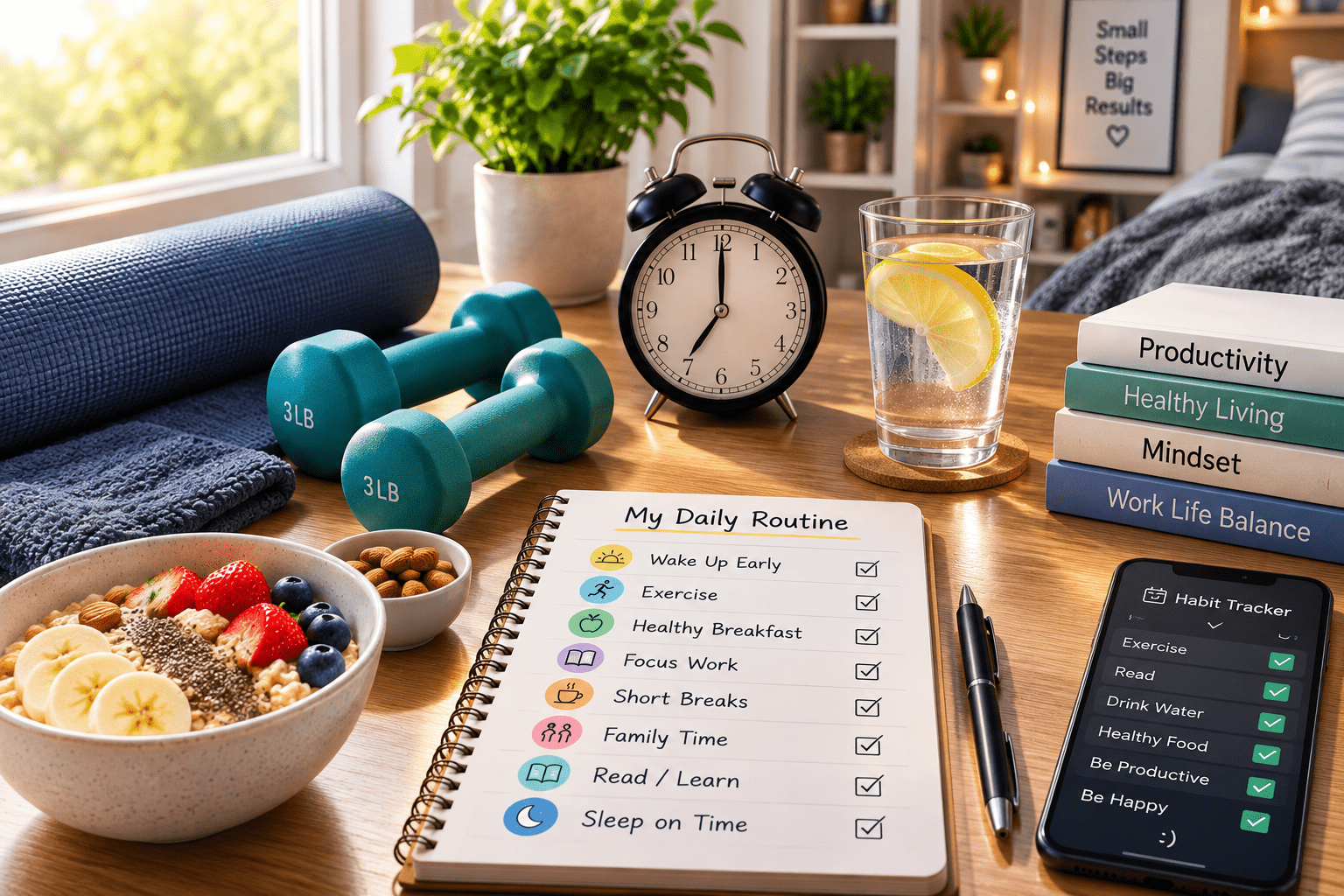
A good daily routine does not need to be complicated.
You do not need to plan every minute of your day or wake up at a specific hour to become more organized. A useful routine simply gives your day some structure and makes it easier to know what needs to happen next.
The key is creating a routine that fits your actual life, rather than copying someone else’s schedule.
In this guide, you’ll learn how to create a simple daily routine that helps you manage your time, stay organized, and get important things done without making your day feel overly structured.
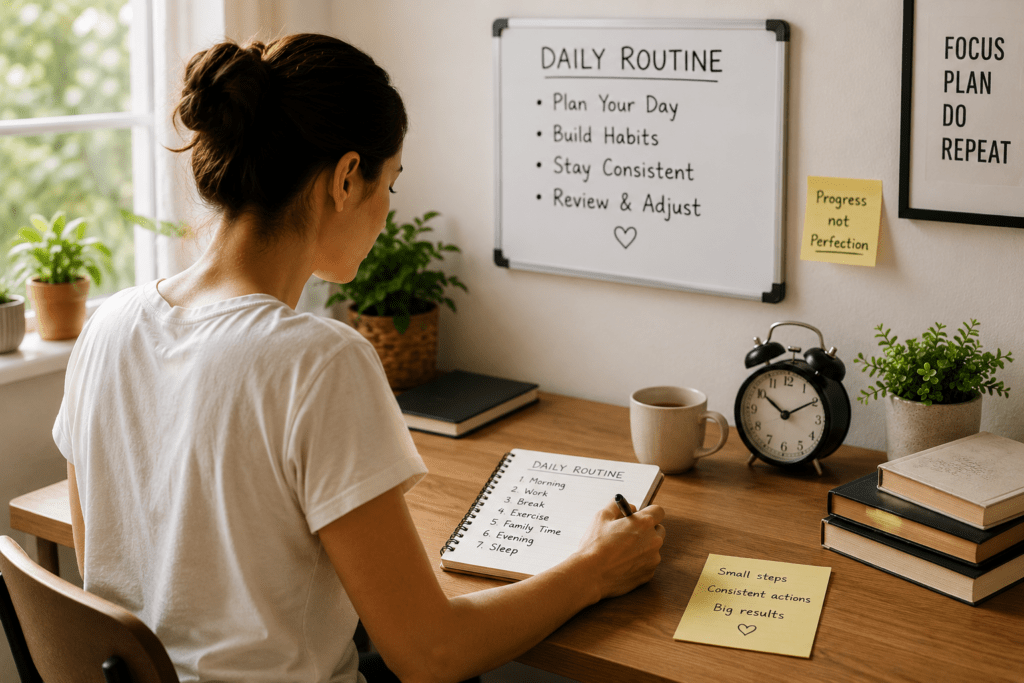
What Is a Daily Routine?
A daily routine is a set of activities you regularly complete during the day, usually in a similar order.
It can include simple things such as:
- Getting ready in the morning
- Checking your schedule
- Preparing meals
- Working or studying
- Exercising
- Completing household tasks
- Planning the next day
- Going to bed at a consistent time
Your routine does not have to look the same every day. The goal is to create a basic structure that makes everyday tasks easier to manage.
Why Create a Daily Routine?
Without some structure, it is easy to spend too much time deciding what to do next.
A simple routine can help you:
- Start your day with a clear plan
- Reduce unnecessary decisions
- Remember important tasks
- Make better use of your time
- Create consistent habits
- Leave more time for things you enjoy
The goal isn’t to make every minute productive. Instead, your routine should help you spend your time intentionally.
Step 1: List the Things You Already Do Every Day
Before creating a new routine, look at your current day.
Write down the activities you regularly do, such as:
- Getting dressed
- Having breakfast
- Going to work
- Checking email
- Preparing meals
- Cleaning
- Exercising
- Spending time with family
- Relaxing
- Going to bed
These activities become the foundation of your routine.
You don’t need to change everything at once.
Step 2: Identify Your Most Important Tasks
Next, choose the tasks that matter most.
Try asking yourself:
What are the three things I need to accomplish today?
For example, your list might look like:
- Finish an important work project
- Buy groceries
- Exercise for 30 minutes
Keeping your daily priorities limited makes your routine easier to follow.
A long list of tasks can make the day feel overwhelming before it even starts.
Step 3: Divide Your Day Into Simple Blocks
Instead of planning every minute, divide your day into broad sections.
For example:
Morning
- Wake up
- Get ready
- Eat breakfast
- Review your priorities
- Start your most important task
Afternoon
- Work or study
- Lunch
- Complete smaller tasks
- Handle errands
Evening
- Prepare dinner
- Finish household tasks
- Relax
- Prepare for tomorrow
This approach gives you structure without requiring a strict schedule.
Step 4: Create a Realistic Morning Routine
Your morning routine should be simple enough that you can actually repeat it.
For example:
7:00 — Wake up
7:10 — Get ready
7:30 — Breakfast
7:45 — Review the day’s priorities
8:00 — Begin work or your main activity
You can adjust the times to fit your schedule.
The important part is creating a sequence that feels natural.
Step 5: Schedule Your Most Important Work
One common mistake is filling the entire day with small tasks while leaving important work until later.
Instead, try giving your most important task a dedicated period.
For example:
9:00–10:30 — Focused work
During this period, avoid unnecessary distractions whenever possible.
Once the important task is finished, you can move on to smaller activities.
Step 6: Leave Some Empty Time
Your routine should not fill every available minute.
Unexpected things happen.
A meeting may take longer than expected. You may need to run an extra errand. Someone may call you. A task may simply take more time than you expected.
Leaving some open space makes your routine more flexible.
For example, instead of scheduling:
1:00 — Task A
1:30 — Task B
2:00 — Task C
2:30 — Task D
you might create broader blocks:
1:00–2:00 — Main tasks
2:00–2:30 — Break / unexpected tasks
2:30–3:30 — Secondary tasks
A little flexibility can make a routine much easier to maintain.
Step 7: Create a Simple Evening Routine
Your evening routine can help you finish the current day and prepare for the next one.
You might:
- Put things back where they belong
- Check tomorrow’s schedule
- Prepare anything you need for the morning
- Write down unfinished tasks
- Choose tomorrow’s priorities
- Set aside some time to relax
Preparing for tomorrow can make the next morning feel much easier.
Step 8: Keep Your Routine Flexible
A routine should support your life, not control it.
Some days will be different.
You may have appointments, travel, family commitments, or unexpected tasks.
Instead of abandoning your routine completely, keep a few basic elements that you can maintain even on busy days.
For example:
Minimum routine:
- Review priorities
- Complete one important task
- Eat regular meals
- Take a short break
- Prepare for tomorrow
This gives you a simple fallback when your normal schedule isn’t possible.
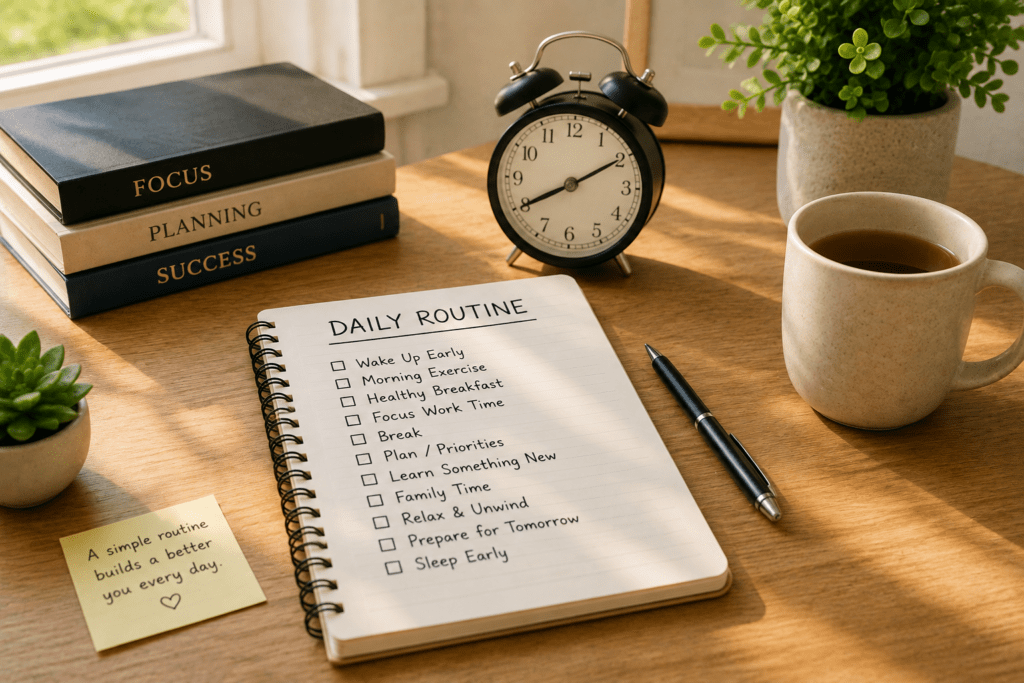
A Simple Daily Routine Example
Here’s an example of a basic routine you can customize:
| Time | Activity |
|---|---|
| 7:00 AM | Wake up |
| 7:15 AM | Get ready |
| 7:30 AM | Breakfast |
| 8:00 AM | Review priorities |
| 8:15 AM | Important task |
| 10:00 AM | Break |
| 10:15 AM | Work / study |
| 12:30 PM | Lunch |
| 1:00 PM | Secondary tasks |
| 3:00 PM | Break / errands |
| 4:00 PM | Finish important tasks |
| 6:00 PM | Dinner |
| 7:00 PM | Personal time |
| 9:00 PM | Prepare for tomorrow |
| 10:30 PM | Wind down |
You don’t need to follow these exact times.
Use the structure as a starting point and adjust it around your own responsibilities.
How to Make Your Routine Easier to Follow
Creating a routine is only the first step. The real challenge is maintaining it.
Start Small
Don’t introduce ten new habits at once.
Start with two or three changes and build from there.
Use Reminders
Calendar reminders, alarms, or a simple written checklist can help you remember new habits until they become automatic.
Keep Important Tasks Visible
A short daily list can be more useful than a complicated productivity system.
Try writing down your top three priorities each morning.
Review Your Routine
After following your routine for a week, ask:
- What worked?
- What felt unnecessary?
- Which tasks consistently took longer than expected?
- What could be moved to another part of the day?
Then adjust it.
Your routine should evolve as your life changes.
Common Daily Routine Mistakes
Making the Schedule Too Complicated
If your routine requires a spreadsheet just to understand it, it may be too complicated.
Start with a simple structure.
Trying to Be Productive All Day
Rest and personal time are part of a healthy routine too.
A good schedule should include breaks and time away from work.
Copying Someone Else’s Routine
A routine that works for another person may not work for you.
Your schedule should reflect your responsibilities, energy levels, and priorities.
Giving Up After One Bad Day
Missing part of your routine doesn’t mean you’ve failed.
Simply return to it the next day.
Consistency over time matters more than perfection.
Final Thoughts
The best daily routine is not necessarily the most detailed one.
A useful routine gives your day enough structure to keep important things moving while leaving room for real life.
Start by identifying the things you already do, choose a few important priorities, organize your day into simple blocks, and leave some flexibility for unexpected events.
Then test your routine for a week and adjust it based on what actually works.
The goal isn’t to control every minute of your day. It’s to make everyday life a little easier.
FAQ
How do I start a daily routine?
Start with the activities you already do every day. Then add a few important priorities and organize them into simple morning, afternoon, and evening blocks.
How many tasks should I put on my daily schedule?
There is no fixed number, but choosing three main priorities is a useful starting point. You can add smaller tasks around them.
Should I plan every minute of my day?
Not necessarily. A flexible schedule with broader time blocks is often easier to maintain than planning every minute.
How long does it take to build a daily routine?
It depends on the person and the routine. Instead of focusing on a specific number of days, focus on practicing the routine consistently and adjusting it when something isn’t working.
What should a simple daily routine include?
A basic routine can include your morning preparation, most important work, meals, breaks, household responsibilities, personal time, and preparation for the following day.