Going to the grocery store without a plan can make a simple shopping trip surprisingly expensive.
You may buy ingredients you already have, forget the items you actually need, pick up things that were not part of your meals, or return home with more food than your family can realistically use.
A good grocery list can solve many of these problems.
But making an effective grocery list is about more than writing down everything you think you might need.
The best grocery list connects what you already have, what you plan to eat, what your household actually uses, and what you can realistically afford.
That makes shopping faster, reduces unnecessary purchases, and can help prevent food from sitting unused in your refrigerator or pantry.
If you want a simple system, you do not need a complicated spreadsheet or a special app.
You can build a useful grocery list in a few minutes using the method below.
Why a Good Grocery List Matters
A grocery list gives you a plan before you enter the store.
That matters because grocery stores are designed to encourage browsing and additional purchases. When you shop without a plan, it is much easier to add items simply because they look appealing or because you suddenly remember something you might need.
A list gives you a reference point.
It also helps answer an important question:
What do we actually need this week?
That question is more useful than:
What should I buy while I’m here?
The difference may seem small, but it can have a significant effect on your spending.
A practical grocery list can help you:
- Spend less on unnecessary items
- Avoid duplicate purchases
- Remember important ingredients
- Reduce food waste
- Make fewer emergency trips to the store
- Shop faster
- Use ingredients you already own
- Plan meals more realistically
- Stay closer to your grocery budget
The goal isn’t to create a perfect list.
The goal is to create a list that reflects your actual life.
Start With Your Kitchen, Not the Grocery Store
One of the most common grocery-shopping mistakes is creating the list from memory.
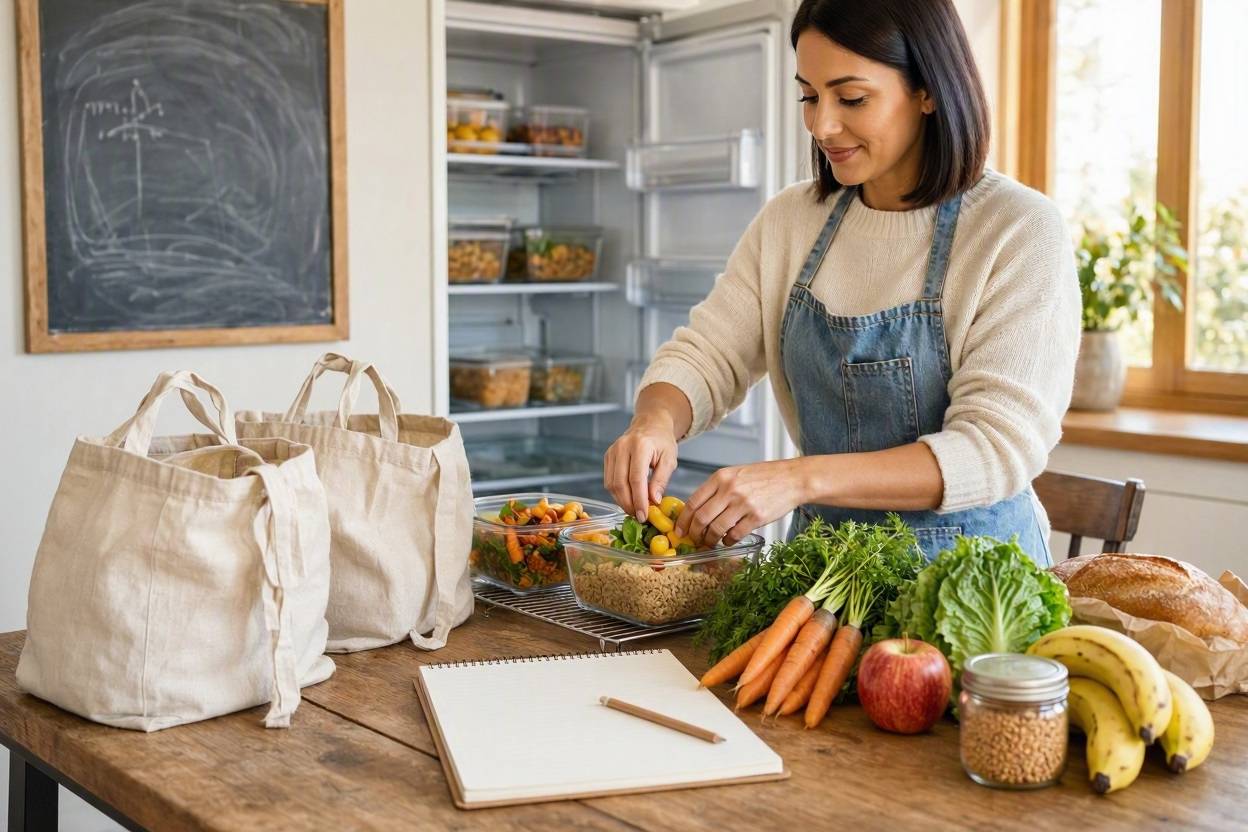
Before deciding what to buy, check what you already have.
Look through:
- Refrigerator
- Freezer
- Pantry
- Cabinets
- Countertops
- Food storage containers
You may discover that you already have enough ingredients to prepare several meals.
For example, imagine you find:
- Pasta
- Rice
- Canned tomatoes
- Black beans
- Frozen vegetables
- Chicken
- Cheese
- Eggs
- Tortillas
You may not need to buy ingredients for seven completely different dinners.
Instead, you could build several meals around what you already have.
This is one of the easiest ways to save money on groceries.
Use What You Have First
Before adding something to your grocery list, ask:
Do I already have this?
Then ask:
Do I have something that could replace it?
For example, if a recipe calls for spinach but you already have frozen broccoli, you may not need to buy spinach unless it is essential to the meal.
This doesn’t mean you should constantly substitute ingredients.
It simply prevents unnecessary purchases.
Check Your Refrigerator for Food That Needs to Be Used
Your refrigerator can tell you what should be on this week’s menu.
Look for foods approaching their best quality.
For example:
- Vegetables beginning to soften
- Fresh herbs
- Opened containers
- Dairy products
- Cooked leftovers
- Fresh fruit
- Meat that should be cooked soon
Instead of treating these foods as leftovers you need to deal with later, make them part of your shopping plan.
For example, if you have half a container of mushrooms that needs to be used, you might plan:
Tuesday: chicken and mushroom pasta
rather than buying completely different ingredients for another meal.
This simple habit can reduce food waste while also reducing your grocery bill.
Check the Freezer Before Buying Meat
The freezer is one of the easiest places to forget about food.
You may already have:
- Chicken breasts
- Ground beef
- Frozen vegetables
- Fish
- Frozen fruit
- Bread
- Prepared meals
- Leftovers
Before buying more meat, check your freezer.
You may find enough ingredients for several dinners.
A useful habit is to keep a mental or written list of major freezer items.
For example:
| Freezer | Amount |
|---|---|
| Chicken breasts | 3 |
| Ground beef | 1 lb |
| Frozen broccoli | 2 bags |
| Frozen berries | 1 bag |
| Bread | 1 loaf |
You don’t need to record every single item.
Focus on foods you regularly buy and use.
Decide What You Will Eat Before Making the List
Once you know what you already have, decide what meals you want to prepare.
This doesn’t need to become a complicated weekly meal plan.
For many households, four or five planned dinners are enough.
Why not seven?
Because plans change.
You may have leftovers.
You may eat out.
You may order takeout.
You may have an unexpectedly busy evening.
You may simply not feel like cooking.
Planning every meal with no flexibility can result in buying too much food.
Instead, create a basic structure.
Example
| Day | Dinner |
|---|---|
| Monday | Chicken tacos |
| Tuesday | Pasta with vegetables |
| Wednesday | Leftovers |
| Thursday | Ground beef rice bowls |
| Friday | Homemade pizza |
| Saturday | Flexible |
| Sunday | Soup or slow-cooker meal |
This gives you structure without forcing you to follow a rigid schedule.
Use a Meal Rotation
You don’t need to invent seven new dinner ideas every week.
A meal rotation can make grocery shopping much easier.
Create a list of meals your household already enjoys.
For example:
Chicken
- Chicken tacos
- Chicken pasta
- Sheet-pan chicken
- Chicken rice bowls
Beef
- Burgers
- Beef tacos
- Beef and rice
- Chili
Vegetarian
- Bean tacos
- Vegetable pasta
- Grilled cheese and soup
- Rice and vegetable bowls
Once you have 15–25 reliable meals, you can rotate them.
This reduces decision fatigue.
It also makes grocery shopping easier because you already know which ingredients are needed.
Build Your Grocery List by Store Section
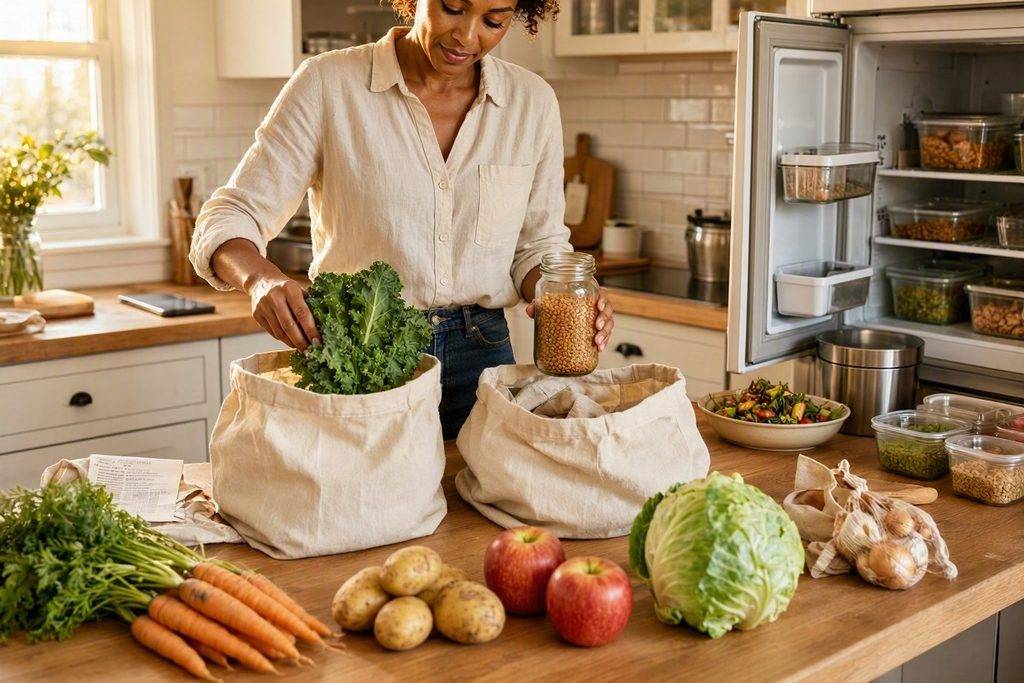
Instead of writing your list randomly, organize it by category.
A simple structure is:
Produce
- Bananas
- Apples
- Lettuce
- Tomatoes
- Onions
- Broccoli
Meat and Seafood
- Chicken
- Ground beef
- Fish
Dairy
- Milk
- Eggs
- Cheese
- Yogurt
Pantry
- Pasta
- Rice
- Canned beans
- Tomato sauce
- Oats
Frozen
- Frozen vegetables
- Frozen fruit
Household
- Paper towels
- Dish soap
- Trash bags
This makes the list easier to follow while shopping.
It also reduces the chance that you will repeatedly walk through the same sections.
Separate Needs From Wants
Not everything on your grocery list has the same priority.
Consider separating items into:
Must Buy
Things you actually need.
Nice to Have
Things you would like if your budget allows.
Optional
Things you can skip entirely.
For example:
Must Buy
- Milk
- Eggs
- Chicken
- Rice
- Vegetables
Nice to Have
- Ice cream
- Specialty cheese
- Favorite snack
Optional
- New sauce to try
- Extra dessert
- Impulse purchase
This becomes particularly useful when your grocery total is higher than expected.
You know exactly which items can be removed first.
Set Your Grocery Budget Before Shopping
A grocery list works better when it has a financial limit.
Before shopping, decide approximately how much you want to spend.
You don’t necessarily need an exact number.
A range can work.
For example:
Weekly grocery budget: $120–$140
Now your list has a boundary.
If your planned purchases appear likely to exceed that range, review the list before you go.
You can ask:
- Can I use something I already have?
- Can I buy a cheaper alternative?
- Can I remove one optional item?
- Can I reduce the amount of meat?
- Can I choose a seasonal produce option?
- Can I postpone a nonessential purchase?
This is much easier than discovering at checkout that your cart is far over budget.
Don’t Confuse Cheap With Good Value
Saving money on groceries doesn’t always mean buying the cheapest product.
The better question is:
Which option gives me the best value for how I actually use it?
For example, a larger package may be cheaper per unit but not actually save money if your household doesn’t finish it.
Similarly, a cheaper ingredient isn’t necessarily a bargain if nobody eats it.
Food that gets thrown away is expensive regardless of its original price.
That is why grocery savings and food-waste reduction should be considered together.
Compare Unit Prices
When comparing similar products, look beyond the package price.
A $4 package isn’t necessarily cheaper than a $5 package if the $5 package contains significantly more food.
Look at the unit price when it is displayed.
For example:
| Product | Package Price | Unit Price |
|---|---|---|
| A | $4.00 | $0.40/oz |
| B | $5.00 | $0.31/oz |
Product B costs more at checkout but may provide better value.
However, there is another question:
Will you actually use it?
If you only need a small amount, the smaller package may still be the smarter purchase.
Don’t Automatically Buy in Bulk
Bulk shopping can save money, but only when the product will actually be used.
Bulk purchases make more sense for items such as:
- Rice
- Pasta
- Canned goods
- Toilet paper
- Paper products
- Certain frozen foods
Be more careful with:
- Fresh berries
- Fresh herbs
- Large quantities of produce
- Dairy
- Foods your family rarely eats
A bulk discount isn’t a savings if half of the product ends up in the trash.
Create a “Use First” Area
One simple system can make a big difference.
Create a small area in your refrigerator for foods that should be eaten soon.
It might contain:
- Leftovers
- Opened containers
- Produce approaching the end of its best quality
- Cooked meat
- Prepared ingredients
Label it mentally as:
USE FIRST
When someone looks for something to eat, they check that area first.
This can turn forgotten food into tomorrow’s lunch or dinner.

Use Ingredients More Than Once
Another way to save money is to choose ingredients that can appear in multiple meals.
For example, suppose you buy:
- Bell peppers
- Onions
- Chicken
- Rice
- Tortillas
- Cheese
You could use those ingredients for:
Monday: Chicken rice bowls
Tuesday: Chicken tacos
Wednesday: Quesadillas
You aren’t eating the exact same meal three times.
You’re simply using overlapping ingredients.
This can reduce the number of ingredients you need to buy.
It also makes your refrigerator easier to manage.
Plan One Leftover Night
Leftovers are one of the simplest tools for reducing food waste.
Instead of treating leftovers as an accident, schedule them.
For example:
Wednesday = Leftover Night
Everyone can choose from food remaining from Monday and Tuesday.
This helps clear the refrigerator before you buy and cook more food.
You can also combine leftovers creatively.
For example:
- Leftover chicken → tacos
- Leftover vegetables → omelet
- Leftover rice → fried rice
- Leftover roasted meat → sandwiches
- Leftover pasta → lunch
The goal isn’t to eat the same dinner repeatedly.
It’s to use food before it gets forgotten.
Be Careful With Recipe Shopping
Recipes can make grocery shopping more expensive when they require many ingredients that you will only use once.
Before adding every ingredient from a recipe, ask:
Will I use the rest of this ingredient?
Suppose a recipe requires:
- One specialty sauce
- A small amount of fresh herbs
- One unusual spice
- A specialty cheese
If you’re unlikely to use those ingredients again, look for alternatives.
This doesn’t mean you should never try new recipes.
It means you should understand the true cost of the meal.
Keep a Running Grocery List During the Week
Don’t wait until the night before shopping to remember everything.
Keep one running list.
Whenever something runs out, add it.
You can use:
- A notes app
- A paper list
- A grocery-list app
- A shared household note
For example:
Grocery List
- Milk
- Eggs
- Bananas
- Rice
- Dish soap
Then, when you plan the week’s meals, add the ingredients you actually need.
This prevents the classic situation of thinking:
“I know I’m forgetting something.”
Make Your Grocery List Around Your Real Schedule
Your shopping list should reflect your week.
If you know Tuesday will be extremely busy, don’t plan a dinner requiring 90 minutes of cooking.
If Wednesday is free, that’s a better day for a more involved meal.
Think about:
- Work schedule
- School activities
- Appointments
- Travel
- Exercise
- Social events
- Days you’ll be home late
Then match meals to those days.
Example
| Day | Schedule | Better Dinner Choice |
|---|---|---|
| Monday | Normal | Pasta |
| Tuesday | Very busy | Tacos |
| Wednesday | Free evening | Chicken dinner |
| Thursday | Late meeting | Leftovers |
| Friday | Family night | Homemade pizza |
This is more realistic than choosing meals without considering your schedule.
The 10-Minute Grocery List Method
If you want something extremely simple, use this routine once a week.
Minute 1–3: Check Your Kitchen
Look through your refrigerator, freezer, and pantry.
Minute 4–5: Review Your Schedule
Identify busy evenings and days when you have more time.
Minute 6–7: Choose Your Meals
Pick four or five dinners.
Minute 8: Add Missing Ingredients
Write down only what you don’t already have.
Minute 9: Add Household Essentials
Check cleaning supplies and other necessities.
Minute 10: Remove Unnecessary Items
Review the list and ask:
Do we really need this?
That’s your final grocery list.
A Simple Weekly Grocery List Template
You can copy this structure and reuse it every week.
Produce
Meat & Seafood
Dairy & Eggs
Pantry
Frozen
Snacks
Household
Already Have
Use First
Estimated Budget
$________
This simple template can become the foundation of your weekly grocery routine.
How to Make Your Grocery List Work for a Family
Grocery shopping becomes more complicated when several people have different preferences.
You don’t have to make everyone completely happy with every meal.
Instead, build meals around flexible components.
For example:
Taco Night
Main ingredients:
- Tortillas
- Chicken or beef
- Rice
- Beans
- Cheese
- Lettuce
- Tomatoes
One person can make a taco.
Another can make a rice bowl.
Someone else can eat the chicken with vegetables.
The same ingredients can support different preferences without requiring three separate dinners.

Let Family Members Add to the List
If other people in your household regularly ask for specific items, give them responsibility for adding those items to the shared list.
For example:
Kids
- Favorite fruit
- School snacks
Partner
- Coffee
- Breakfast items
You
- Dinner ingredients
- Household supplies
This reduces the mental burden of trying to remember everyone’s needs.
It also gives everyone a chance to contribute.
What to Do When Your Grocery Bill Is Still Too High
If your grocery total continues to exceed your budget, don’t simply tell yourself to “spend less.”
Look for patterns.
Review your receipts and ask:
Are you buying too many convenience foods?
Convenience products can be useful, but frequent purchases can increase the bill.
Are you throwing away produce?
If so, buy smaller quantities.
Are you buying too much meat?
Try replacing some meals with beans, eggs, pasta, or other affordable proteins.
Are snacks taking up a large part of the budget?
Create a specific snack budget.
Are you making too many impulse purchases?
A better list and a clearer budget can help.
The goal is not to eliminate everything you enjoy.
It’s to identify where your money is actually going.
Common Grocery List Mistakes
Mistake 1: Shopping Without Checking Your Pantry
You may buy duplicates.
Better approach: Check your existing food first.
Mistake 2: Planning Too Many Meals
Seven complicated meals can create unnecessary stress.
Better approach: Plan four or five and leave room for leftovers.
Mistake 3: Buying Food Because It’s on Sale
A discount isn’t automatically a saving.
Better approach: Buy sale items you already use.
Mistake 4: Ignoring Your Schedule
A complicated meal on a busy night is likely to fail.
Better approach: Match meals to your available time.
Mistake 5: Buying More Fresh Food Than You Can Eat
This is a major source of food waste.
Better approach: Buy realistic quantities.
Mistake 6: Forgetting Household Items
You may remember dinner ingredients but forget detergent or trash bags.
Better approach: Keep a separate household section.
Frequently Asked Questions
How often should I make a grocery list?
For most households, once a week works well. However, some people prefer planning three or four days at a time. The best schedule is the one that matches how frequently you shop and how quickly your household uses food.
How can I make a grocery list quickly?
Start by checking your refrigerator, freezer, and pantry. Then review your schedule, choose several meals, and add only the ingredients you don’t already have.
How can a grocery list save money?
A grocery list can reduce impulse purchases, prevent duplicate purchases, help you plan meals around ingredients you already own, and make it easier to stay within a budget.
Should I plan every meal for the week?
Not necessarily. Planning four or five dinners can provide enough structure while leaving room for leftovers, takeout, unexpected schedule changes, or meals you already have available.
How can I reduce food waste while grocery shopping?
Buy realistic quantities, use ingredients in multiple meals, schedule a leftover night, check your freezer, and create a “use first” area in your refrigerator.
Is it cheaper to buy groceries in bulk?
Sometimes, but not always. Bulk buying works best for foods and household products you regularly use and can store properly. Buying large quantities of perishable food that you don’t finish can actually cost more.
Should I use a grocery list app?
A grocery list app can be useful if you shop frequently or share shopping responsibilities with another person. However, a simple notes app or paper list can work just as well.
How to Make Grocery Shopping Easier Every Week
The biggest benefit of a good grocery list isn’t simply spending less money.
It’s reducing the number of decisions you have to make.
Instead of asking:
What should I buy?
you already know.
Instead of asking:
What should we have for dinner tonight?
you already have several options.
Instead of discovering forgotten vegetables at the back of the refrigerator, you have a plan for using them.
The system becomes easier with repetition.
After several weeks, you’ll start noticing patterns.
You’ll know:
- Which meals your family actually eats
- Which ingredients disappear quickly
- Which products aren’t worth buying
- How much produce you really need
- Which meals create useful leftovers
- Which items are worth buying in bulk
- How much you normally spend
That information makes every future grocery list better.
Final Thoughts
Learning how to make a grocery list isn’t really about creating a longer shopping list.
It’s about creating a smarter connection between your kitchen, your meals, your schedule, and your budget.
A simple system is enough:
Check what you have → Review your schedule → Choose your meals → Add missing ingredients → Set a budget → Review the list → Shop.
You don’t need to follow the system perfectly.
You just need to use it consistently.
Start with one weekly grocery list.
Check your refrigerator before shopping.
Plan a few realistic meals.
Use ingredients more than once.
Leave room for leftovers.
And most importantly, buy food based on what your household will actually eat—not what you imagine you might need.
A grocery list that saves money isn’t the one with the fewest items.
It’s the one that helps you buy the right things, use what you already have, and waste less.


