
A grocery list may seem like a small thing, but it can make grocery shopping much easier.
Without a plan, it is easy to forget important items, buy things you already have, or pick up products you did not intend to purchase.
A simple grocery list can help you stay organized, reduce food waste, and make better decisions while shopping.
The key is not simply writing down what you need.
It is creating a list based on what you already have, what you plan to eat, and what you actually need to buy.
1. Check Your Kitchen First
Before creating your grocery list, look through your refrigerator, freezer, and pantry.
Check what you already have.
You may find ingredients that can be used for several meals.
This prevents you from buying duplicates and helps you use food before it expires.
Make a quick note of items that are running low rather than automatically adding everything to your list.
2. Decide What Meals You Need
You do not need to plan every meal for the entire week.
Start by deciding what you are likely to eat over the next several days.
Think about:
- Breakfast
- Lunch
- Dinner
- Snacks
- Drinks
Choose meals that use some of the same ingredients.
For example, a few vegetables can potentially be used in several different meals instead of buying separate ingredients for every recipe.
3. Build the List Around Ingredients
Instead of writing only the names of meals, break them down into ingredients.
For example, if you plan to make several meals that use chicken, vegetables, or rice, check how much you already have before adding those ingredients to the shopping list.
This makes your list more accurate.
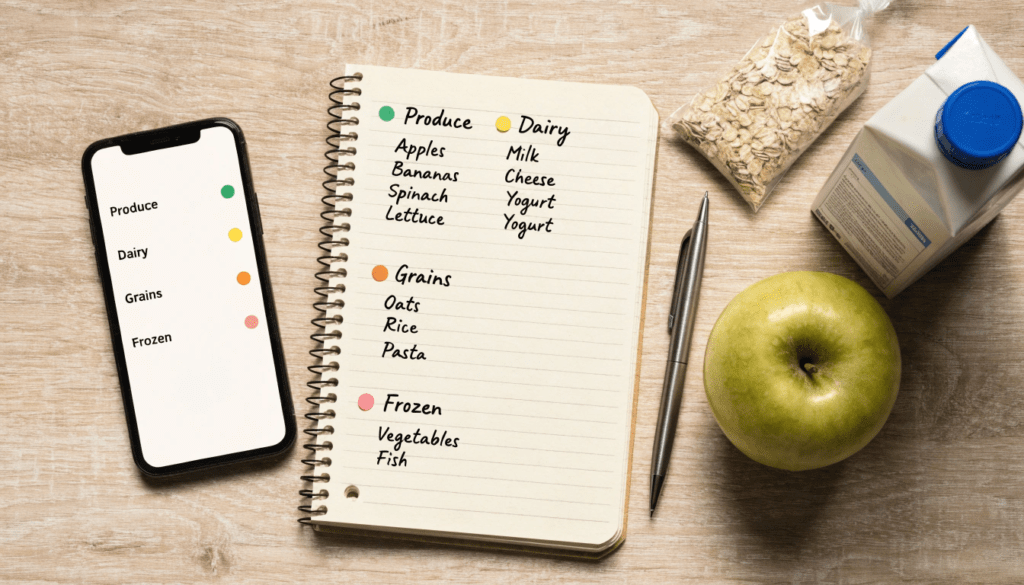
4. Organize the List by Store Section
A long list can become difficult to follow if everything is mixed together.
Organize your grocery list into sections such as:
Produce
- Fruits
- Vegetables
- Fresh herbs
Dairy
- Milk
- Cheese
- Yogurt
Meat and Protein
- Chicken
- Beef
- Eggs
Pantry
- Rice
- Pasta
- Canned foods
- Cooking ingredients
Frozen
- Frozen vegetables
- Frozen meals
- Other frozen products
This can help you move through the store more efficiently.
5. Check Your Pantry Before Buying Staples
Many grocery purchases are products people buy automatically.
Items such as rice, pasta, flour, cooking oil, canned foods, and spices can accumulate quickly.
Before adding them to your list, check whether you already have enough.
This simple step can prevent unnecessary purchases.
6. Set a Grocery Budget
A grocery list works better when you have a spending limit.
Your budget does not need to be perfect.
Choose an approximate amount that you want to stay within for the shopping trip.
Then prioritize the items you actually need.
If your estimated total becomes too high, you can remove optional items before reaching the checkout.
7. Separate Needs From Wants
Not every item on your list has the same priority.
Mark essential items separately from optional purchases.
For example:
Need
- Milk
- Eggs
- Vegetables
- Rice
Optional
- Snacks
- Desserts
- Specialty products
This gives you more control if you are approaching your budget.
8. Avoid Shopping Without a Plan
Walking into a grocery store without knowing what you need makes impulse purchases more likely.
A list gives you a clear starting point.
However, do not treat the list as a strict rule if you discover a genuinely better value.
The goal is to stay intentional rather than buying randomly.
9. Compare Prices by Unit
Package prices can be misleading.
One product may cost less than another but contain significantly less.
When possible, compare the unit price.
For example, compare the price per:
- Ounce
- Pound
- Item
- Fluid ounce
This can help you determine which option actually provides better value.
10. Be Careful With Bulk Purchases
Buying larger quantities can sometimes save money.
But only if you will actually use the product.
A larger package is not a bargain if part of it eventually gets thrown away.
Before buying in bulk, ask:
Will I use all of this before it expires?
If the answer is uncertain, a smaller package may be the better choice.
11. Plan Around Ingredients You Already Have
One of the easiest ways to reduce grocery spending is to build meals around existing ingredients.
For example, if you already have:
- Rice
- Pasta
- Beans
- Frozen vegetables
- Canned tomatoes
look for meals that use those ingredients.
This can reduce the number of new items you need to purchase.
12. Keep a Running List During the Week
Do not wait until the day before shopping to remember everything you need.
Keep a running grocery list throughout the week.
When you finish an item or notice that something is running low, add it immediately.
You can use:
- A notes app
- A paper list
- A grocery-list app
- A shared household list
The best method is the one you will actually use.
13. Check Expiration Dates at Home
Before buying another package of the same product, check the items you already have.
This is particularly useful for products that are easy to forget about.
You may discover that something you thought you needed is already sitting in the back of a cabinet or refrigerator.
14. Keep a Short List of Regular Staples
Some households buy the same basic products every week.
Create a separate list of regular staples.
For example:
- Milk
- Eggs
- Bread
- Fresh produce
- Coffee
- Household basics
Then check the list before every shopping trip.
Only add an item to the actual shopping list if you need it.
15. Review Your Grocery Spending
After shopping, keep your receipt.
At the end of the month, look at your grocery spending.
Ask yourself:
- Which products do I buy most often?
- Which purchases were unnecessary?
- Which foods were wasted?
- Which meals were inexpensive?
- Which items have increased in price?
This information can help you create better grocery lists in the future.

A Simple Grocery List Template
You can use this basic structure:
Produce
- [ ]
- [ ]
- [ ]
Meat & Protein
- [ ]
- [ ]
- [ ]
Dairy
- [ ]
- [ ]
- [ ]
Pantry
- [ ]
- [ ]
- [ ]
Frozen
- [ ]
- [ ]
- [ ]
Household
- [ ]
- [ ]
- [ ]
Optional
- [ ]
- [ ]
Before leaving home, check the refrigerator, freezer, and pantry one more time.
The 5-Minute Grocery List Method
If you do not want to spend a lot of time planning, use this quick process.
Minute 1: Check your refrigerator.
Minute 2: Check your freezer.
Minute 3: Check your pantry.
Minute 4: Decide what meals you need.
Minute 5: Write the shopping list and organize it by store section.
That is enough to create a basic plan for your shopping trip.
Final Thoughts
A good grocery list is more than a reminder of what to buy.
It can help you use the food you already have, avoid unnecessary purchases, stay within your budget, and spend less time walking around the store.
You do not need a complicated meal-planning system.
Start by checking what you already have, choosing a few meals, setting a spending limit, and creating a simple organized list.
The more consistently you do it, the easier grocery shopping becomes.


