
Saving money does not always require making major lifestyle changes.
In many cases, the biggest opportunities are hidden in the small expenses you repeat every week or every month.
A few dollars saved on groceries, subscriptions, transportation, utilities, and everyday purchases can add up over time.
The key is to focus on expenses you can realistically control without making your daily life unnecessarily difficult.
Here are some practical ways to reduce everyday spending while keeping your routine comfortable.
1. Start by Tracking Your Everyday Spending
Before trying to save money, find out where your money is actually going.
For one or two weeks, keep track of your everyday purchases.
Include things such as:
- Groceries
- Coffee and drinks
- Takeout
- Transportation
- Online purchases
- Subscriptions
- Household items
- Entertainment
You may notice spending patterns that are easy to overlook when individual purchases seem small.
The goal isn’t to eliminate every expense.
It’s to identify the expenses that repeatedly add up.
2. Review Your Subscriptions
Subscriptions are one of the easiest expenses to forget about.
Check your recurring payments and ask yourself:
- Do I still use this service?
- How often do I use it?
- Could I use a cheaper plan?
- Am I paying for multiple services that do similar things?
Canceling even one unused subscription can reduce your monthly expenses without changing your daily routine very much.
3. Plan Your Grocery Shopping
Food is a major recurring expense for many households.
A simple grocery plan can help reduce unnecessary purchases.
Before shopping:
- Check what you already have.
- Make a short meal plan.
- Create a shopping list.
- Compare prices where practical.
- Avoid buying items simply because they look appealing.
Shopping with a list does not guarantee that you will spend less, but it can make your purchases more intentional.
4. Compare the Unit Price
A larger package is not always the cheaper option.
When comparing similar products, look at the unit price rather than only the total price.
For example, compare the cost per:
- Ounce
- Pound
- Liter
- Item
- Serving
This can make it easier to determine which option actually provides better value.
5. Cook More Meals at Home
Eating out and ordering food can become expensive when repeated frequently.
You don’t have to stop completely.
Instead, consider replacing just a few purchased meals each week with simple meals prepared at home.
Easy meals can often be prepared using ingredients you already have.
The objective is not to make every meal from scratch.
It’s to reduce unnecessary convenience spending.
6. Use a 24-Hour Rule for Unplanned Purchases
Impulse purchases can make a noticeable difference in your monthly spending.
When you see something you want but don’t actually need, wait 24 hours before buying it.
For more expensive purchases, consider waiting even longer.
After the waiting period, ask yourself:
Would I still buy this if I had not seen it today?
If the answer is no, you may have just avoided an unnecessary expense.
7. Reduce Energy Waste
Small changes around the home can help reduce energy consumption.
Consider:
- Turning off lights when they aren’t needed.
- Unplugging devices that consume power unnecessarily.
- Adjusting heating or cooling settings when appropriate.
- Using energy-efficient lighting.
- Washing clothes with appropriate settings.
- Keeping doors and windows properly sealed where needed.
The exact savings will depend on your home, climate, appliances, and energy rates.
The important idea is to focus on waste rather than comfort.
8. Be Careful With Convenience Spending
Convenience can be useful, but frequent convenience purchases can become expensive.
Examples include:
- Delivery fees
- Service fees
- Express shipping
- Frequent rides
- Prepared meals
- Last-minute purchases
Before paying for convenience, ask whether there is a simple alternative.
You don’t need to eliminate convenience entirely.
Use it when it genuinely saves you valuable time or solves a real problem.
9. Make a List Before Shopping Online
Online shopping makes it easy to purchase things you didn’t originally intend to buy.
Before opening a shopping app or website, write down what you actually need.
Then stick to the list as closely as possible.
This is particularly useful for household items, clothing, accessories, and small purchases that can accumulate over time.
10. Take Advantage of What You Already Own
Before buying something new, check whether you already have something that can solve the problem.
This applies to:
- Kitchen equipment
- Tools
- Clothing
- Storage products
- Electronics
- Cleaning supplies
Sometimes the cheapest option is simply using what you already have.

11. Avoid Paying for Features You Don’t Need
When choosing a product or service, the most expensive option isn’t automatically the best value.
Ask yourself which features you actually use.
A less expensive plan or product may provide everything you need.
This is especially useful for:
- Software
- Mobile plans
- Internet services
- Streaming services
- Household appliances
- Electronics
Pay for useful features, not simply for a longer list of features.
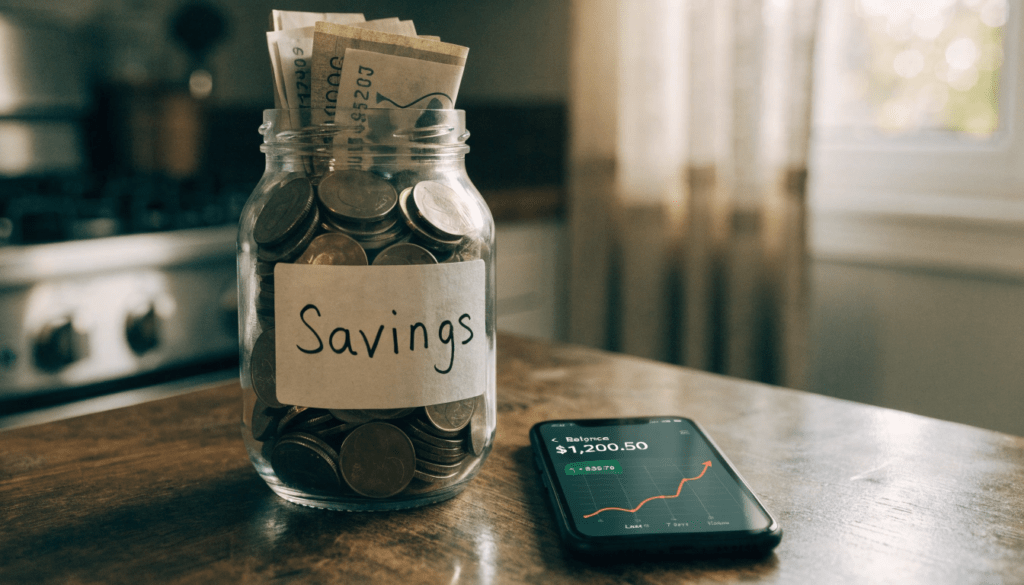
12. Create a Small “Savings” Category
Instead of thinking only about cutting expenses, create a specific place for the money you save.
For example, if you reduce several monthly expenses, direct part of that difference toward a savings goal.
This creates a visible connection between your spending decisions and your financial progress.
Even small amounts can become meaningful when saved consistently.
A Simple Weekly Money Check
You can spend 10–15 minutes once a week reviewing your spending.
Ask:
What did I spend money on this week?
Which purchases were necessary?
Which purchases were optional?
Did I pay for anything I forgot about?
Is there one expense I can reduce next week?
You don’t need to analyze every transaction in detail.
One useful adjustment each week can be enough to create progress.
Don’t Try to Cut Everything
One of the biggest mistakes when trying to save money is making the plan too restrictive.
If you remove every enjoyable expense, the strategy may become difficult to maintain.
Instead, decide which expenses matter most to you.
Keep the things that provide genuine value and look for savings in areas that matter less.
A sustainable plan is usually more useful than an extreme one.
Final Thoughts
Saving money on everyday expenses is less about making one huge change and more about making better decisions repeatedly.
Review your recurring expenses, plan your shopping, avoid unnecessary purchases, compare prices, and make better use of what you already own.
You don’t have to change everything at once.
Start with one expense category, make one improvement, and build from there.
Small savings become much more powerful when they become consistent habits.


