
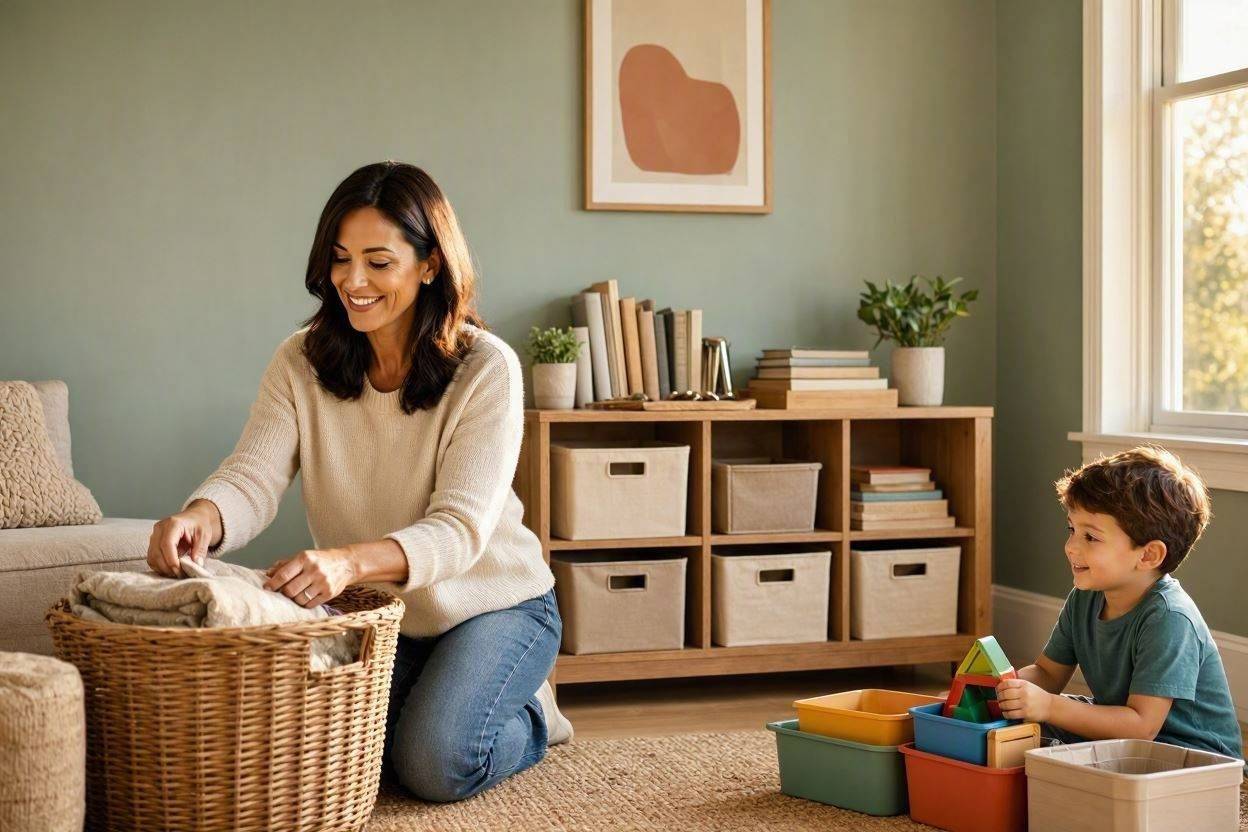
A messy home can make even simple tasks feel harder than they should.
When everything seems out of place, it is tempting to try to organize the entire house in one day. But that approach often creates more stress than progress.
The better solution is to use a simple system that breaks home organization into smaller, manageable steps.
You do not need to spend an entire weekend cleaning and organizing. With the right approach, you can make noticeable improvements by focusing on one area at a time.
Here is a practical way to organize your home without feeling overwhelmed.
Start With One Small Area
The biggest mistake people make when organizing is starting with too much.
Instead of thinking about the entire house, choose one small area.
For example:
- One kitchen drawer
- One bathroom cabinet
- One closet shelf
- One section of your bedroom
- One area of the living room
Finishing a small area gives you a quick sense of progress and makes it easier to continue.
Once one area is organized, move to the next.
Use the Four-Group Method
As you go through your belongings, create four simple groups:
Keep: Things you use regularly or genuinely need.
Move: Things that belong somewhere else in the house.
Donate: Items that are still useful but no longer needed.
Discard: Broken, damaged, expired, or unusable items.
This method prevents you from simply moving clutter from one location to another.
The goal is not just to make an area look cleaner. The goal is to reduce unnecessary items.
Ask Yourself a Simple Question
When you are unsure whether to keep something, ask:
“Would I choose to buy this again today?”
If the answer is no, consider whether you really need to keep it.
This can be especially useful when dealing with clothes, kitchen equipment, old electronics, decorations, and other items that accumulate over time.
You do not have to throw everything away. The question simply helps you make more deliberate decisions.
Give Everything a Home
One of the easiest ways to keep your home organized is to make sure frequently used items have a specific place.
For example:
- Keys can stay in one designated location.
- Important documents can have their own folder.
- Cleaning supplies can stay together.
- Chargers can have a dedicated drawer.
- Shoes can have a designated storage area.
When something has a clear home, putting it away becomes much easier.
It also reduces the amount of time you spend searching for things.
Do Not Buy Storage Before Decluttering
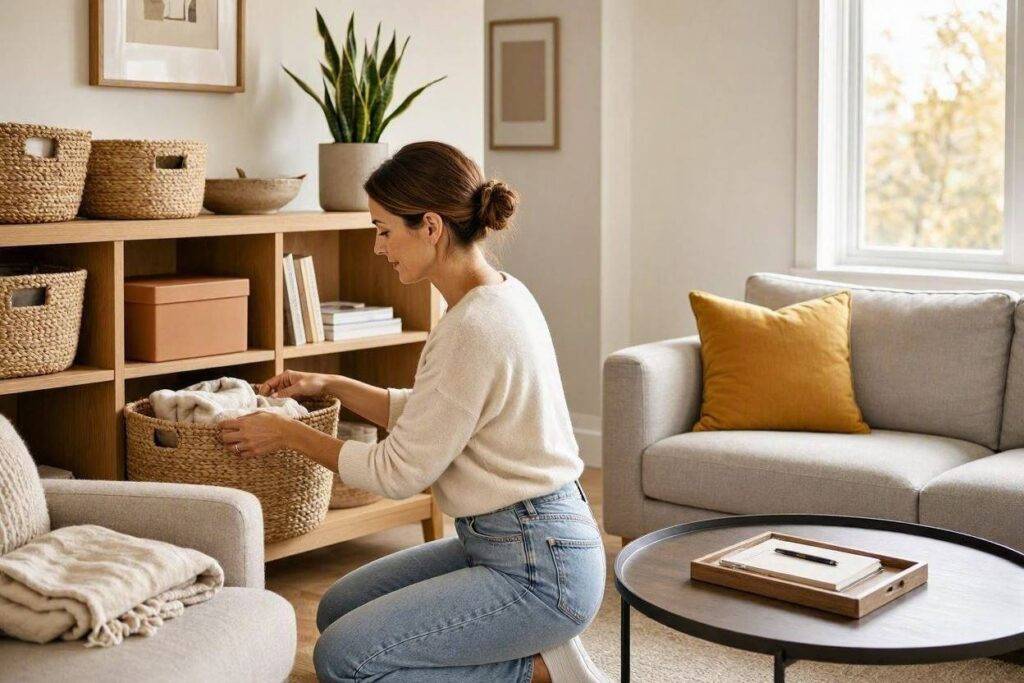
Storage containers can make an organized space look attractive, but buying them too early can create another problem.
You may end up organizing things you do not actually need.
Declutter first.
Once you know what you are keeping, determine what type of storage you actually need.
This can save money and prevent unnecessary containers from becoming part of the clutter.
Organize According to How You Use the Space
Your home does not need to look like a showroom.
The best organization system is the one that works with your daily habits.
Items you use every day should be easy to reach.
Items you rarely use can be stored in less accessible areas.
For example, everyday kitchen equipment should be easier to access than seasonal items.
The same principle applies throughout your home.
Convenience is part of good organization.
Set a Short Daily Reset
You do not need to spend hours cleaning every evening.
A short daily reset can make a major difference.
Before going to bed, spend a few minutes putting things back where they belong.
You might:
- Put away clothes
- Clear the kitchen counter
- Return items to their designated places
- Throw away obvious trash
- Prepare frequently used items for the next day
The goal is not perfection.
The goal is to prevent small amounts of clutter from becoming a large problem.
Use the One-In, One-Out Rule
Once your home is organized, maintaining it becomes the next challenge.
A simple rule can help:
When you bring in a new item, consider removing an old item.
For example, if you buy a new shirt, you might donate one you no longer wear.
If you purchase a new kitchen gadget, consider whether there is an older item you rarely use.
This keeps the number of possessions from continuously increasing.
Avoid Trying to Finish Everything at Once
Home organization is not a race.
Trying to complete the entire house in one day can leave you exhausted and make the process feel like a chore.
Instead, create small goals.
You could organize one drawer today, one shelf tomorrow, and one closet section later in the week.
Small improvements eventually add up to a much more manageable home.
A Simple Weekly Home Organization Routine
You can also create a basic weekly system.
For example:
Monday: Organize one small area.
Tuesday: Remove items that belong somewhere else.
Wednesday: Declutter one drawer or shelf.
Thursday: Organize documents or miscellaneous items.
Friday: Reset commonly used areas.
Weekend: Spend a little more time on one larger area if necessary.
You can adjust the schedule to fit your routine.
The important part is consistency.
Final Thoughts
Organizing your home does not require a complicated system or an entire weekend.
Start small, remove things you no longer need, give frequently used items a designated place, and create a simple routine for maintaining your progress.
The goal is not to create a perfect home.
It is to create a home that is easier to live in.
When everything has a place and unnecessary clutter is reduced, everyday tasks can become simpler and less stressful.
Start with one small area today. You may be surprised by how much difference a small improvement can make.